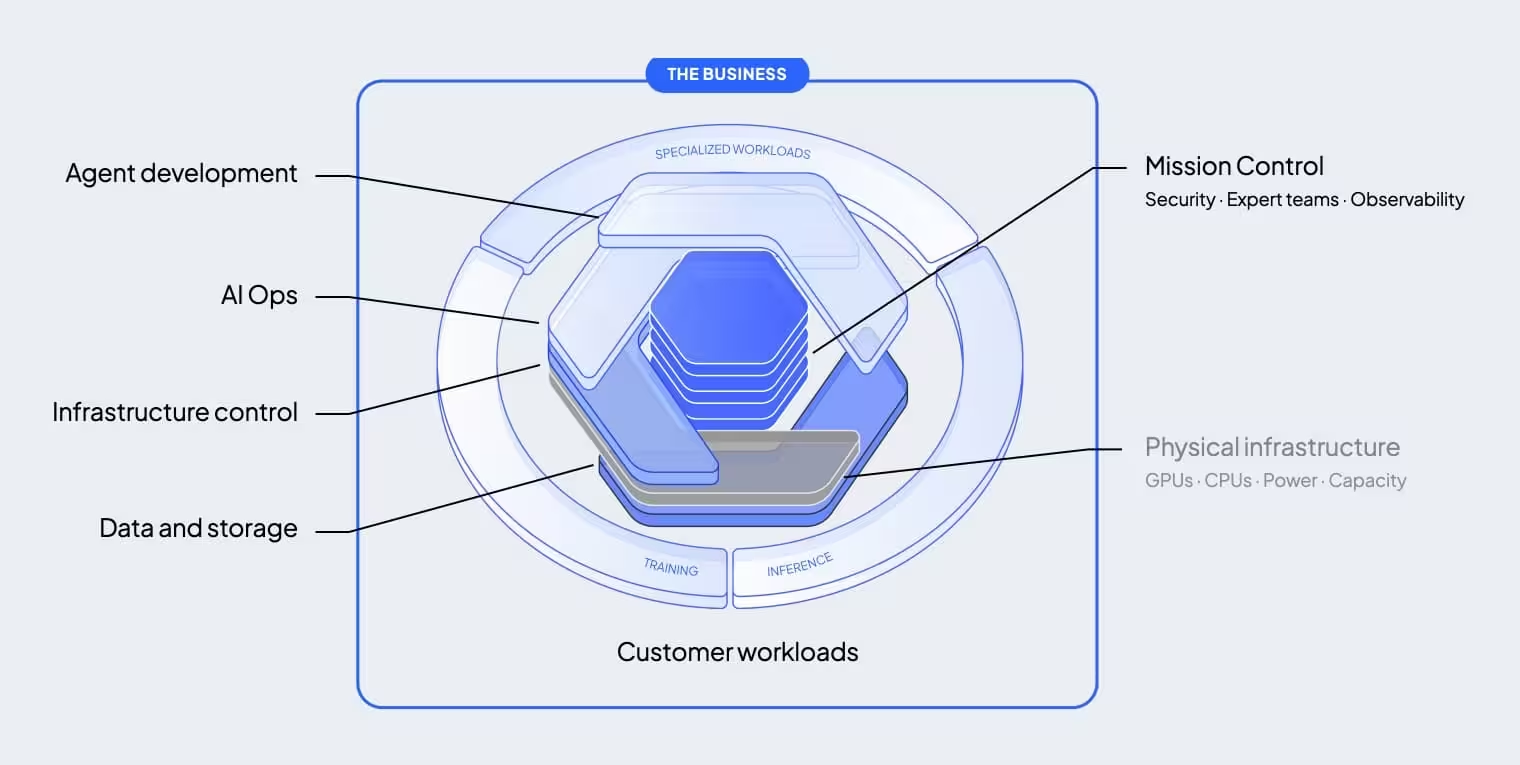
I spend a lot of time talking with the investors financing the AI buildout. Their questions often begin with GPUs, but they don’t end there. They understand that hardware is only one part of what gives an AI cloud platform value and staying power.
The broader conversation often stops too soon, though. It’s easy to treat the AI buildout as a simple hardware story. Buy GPUs, plug them in, and rent them out.
By that logic, every company racking chips is doing the same thing, differentiated only by how many chips they have and how cheaply they bought them. But that logic misses the point that matters most: which companies are built to last in this fast-evolving AI market?
What an AI cloud platform adds beyond GPU capacity
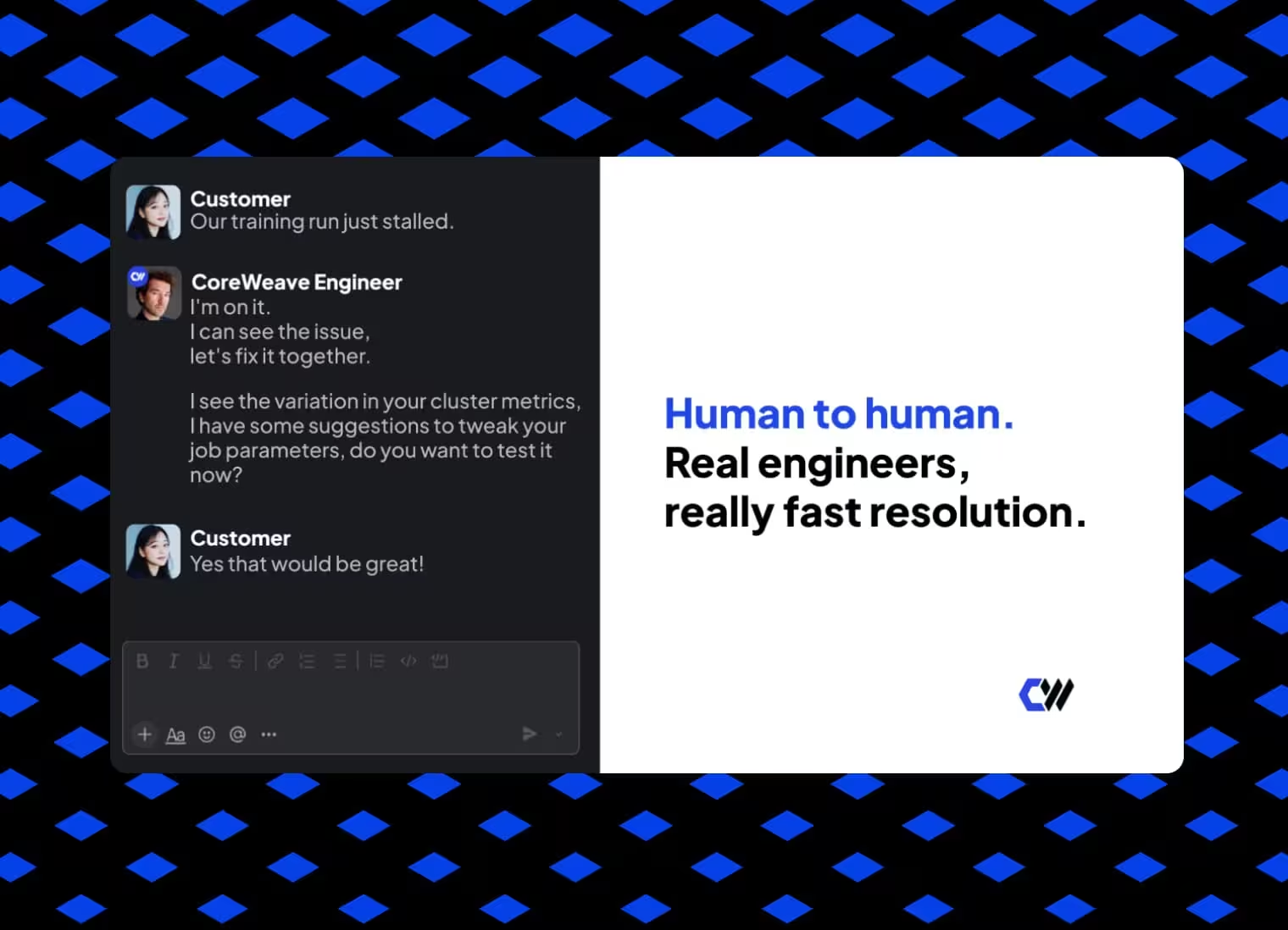
Renting GPU capacity alone leaves customers responsible for the surrounding software and operations. A hyperscaler or frontier lab with infrastructure teams can buy a bunch of GPUs and CPUs and manage everything in-house. Most companies can’t and don’t need to. They need the orchestration, observability, security, development tools, and access to expert teams that turn a rack of chips into an environment where their businesses can build and run AI products.
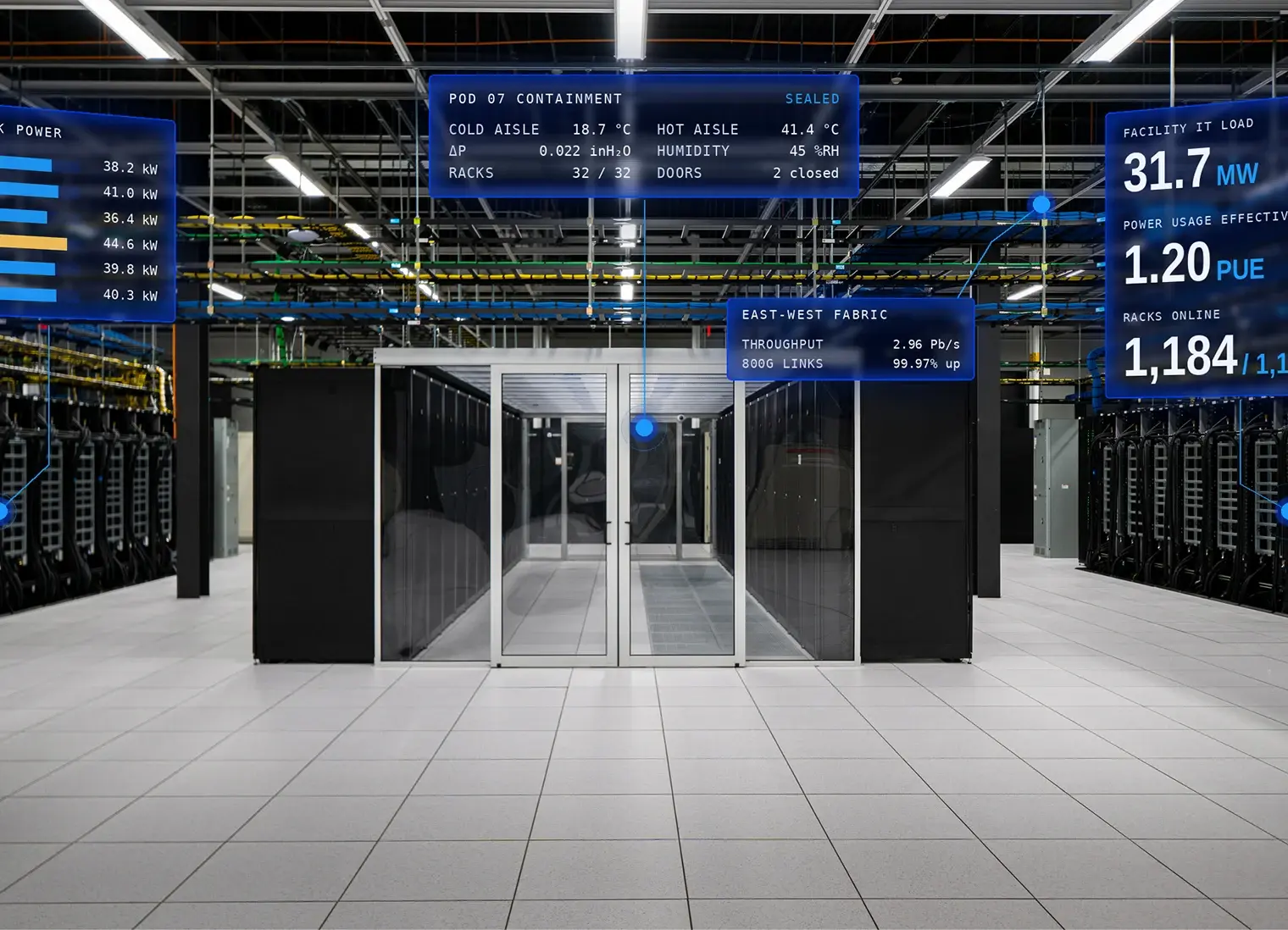
That is where GPU provisioning becomes an AI cloud. It’s not the hardware itself but everything required to make that hardware consistently useful and everything required to make it work however a business needs it. Setting up a cluster in a data center is one thing. Building a cloud is another. That requires a network of connected data centers around the world.
Delivering an AI cloud platform means taking responsibility for that fully integrated environment, one purpose-built around the workloads that customers need to run rather than simply the newest chip available.
Diversification is evidence
The difference becomes visible in the customer base. A business that primarily sells raw capacity will naturally gravitate toward a small number of large buyers. Those are the customers capable of consuming GPUs at scale while supplying the infrastructure expertise themselves.
But it’s that more fulsome platform of technical capabilities offered atop capacity that widens the addressable market. Enterprises across financial services, industrial manufacturing, cybersecurity, and other industries are eager to explore, build with, and deploy AI. However, they need an AI cloud environment they can actually use, one that makes it easy for them to build and deploy new AI applications and agents.
Customer concentration can have many causes, particularly early in a company’s growth, so diversification alone is not proof of platform depth. But it is an important signal. When a broad range of enterprises—I think about Jane Street, Zonos, and Mercado Libre—chose to build production systems on the same AI cloud, it suggests a provider like CoreWeave is doing more than supplying chips. We are delivering a platform customers expect to build upon and grow with for years rather than capacity they need for a few quarters.
Customer breadth is an important measure of that durability.
None of this means hardware doesn't matter. Capacity, power, and chip access, much of which runs on NVIDIA silicon, are still the entry price for competing at all. But the entry price isn't the business. The business is the innovation woven into the layers that sit atop it, including security, orchestration, the tooling that lets a customer actually ship a product, and access to industry-leading expertise.
That's the case for treating "AI cloud" and "GPU rental" as two different categories, even when they're sitting in the same rack. One is a commodity. The other is a platform.
In the end, only one of them is durable.