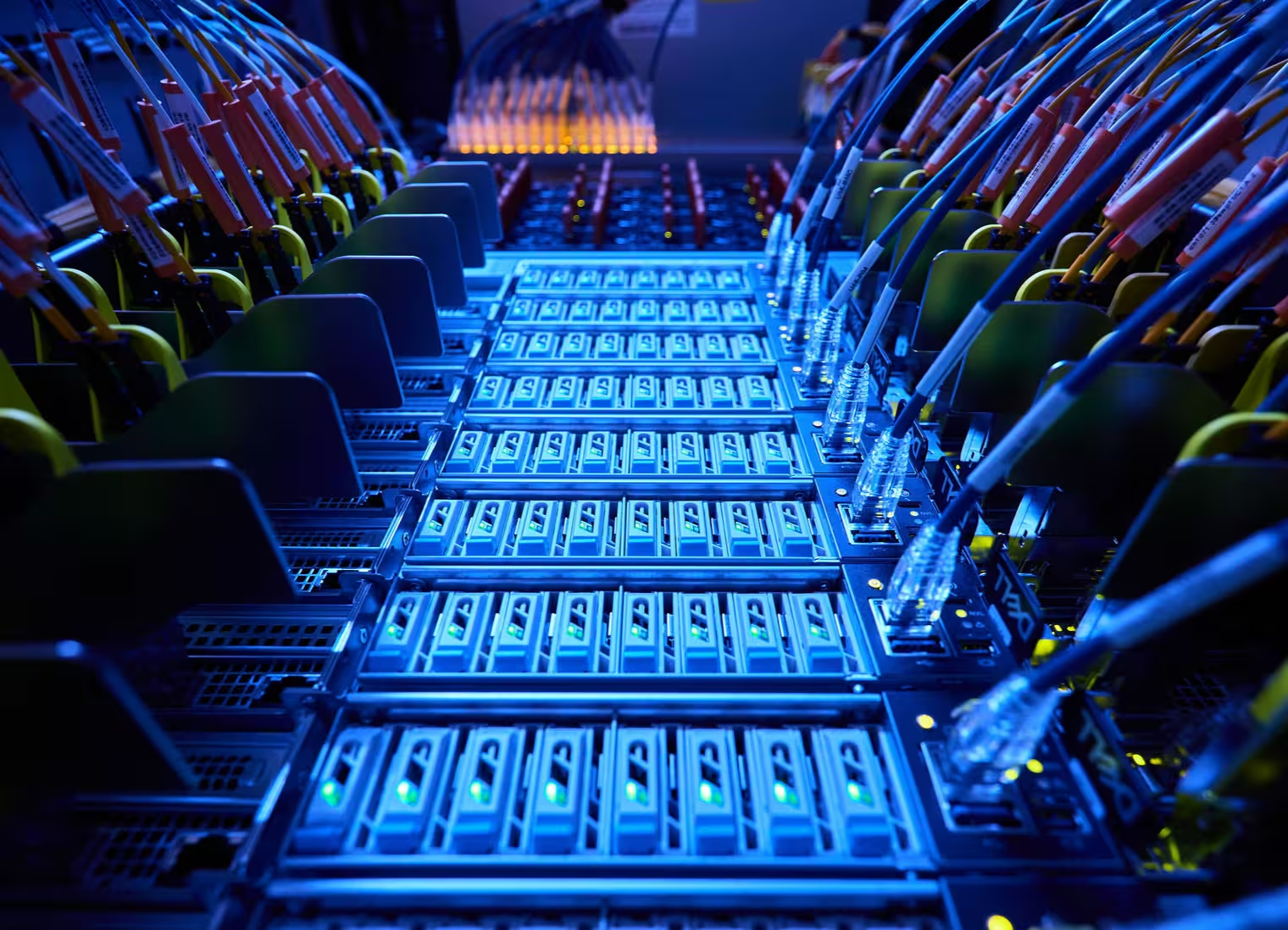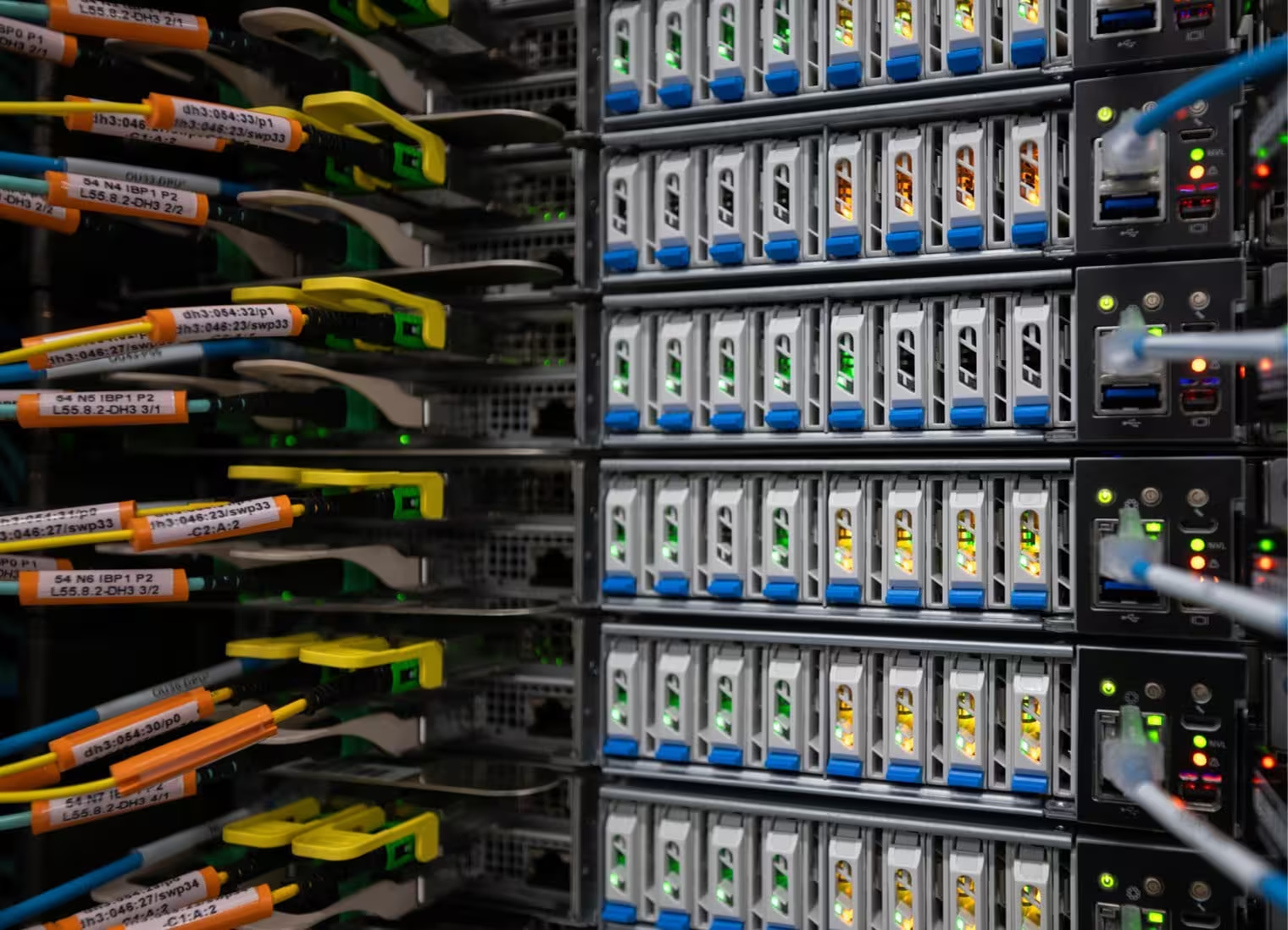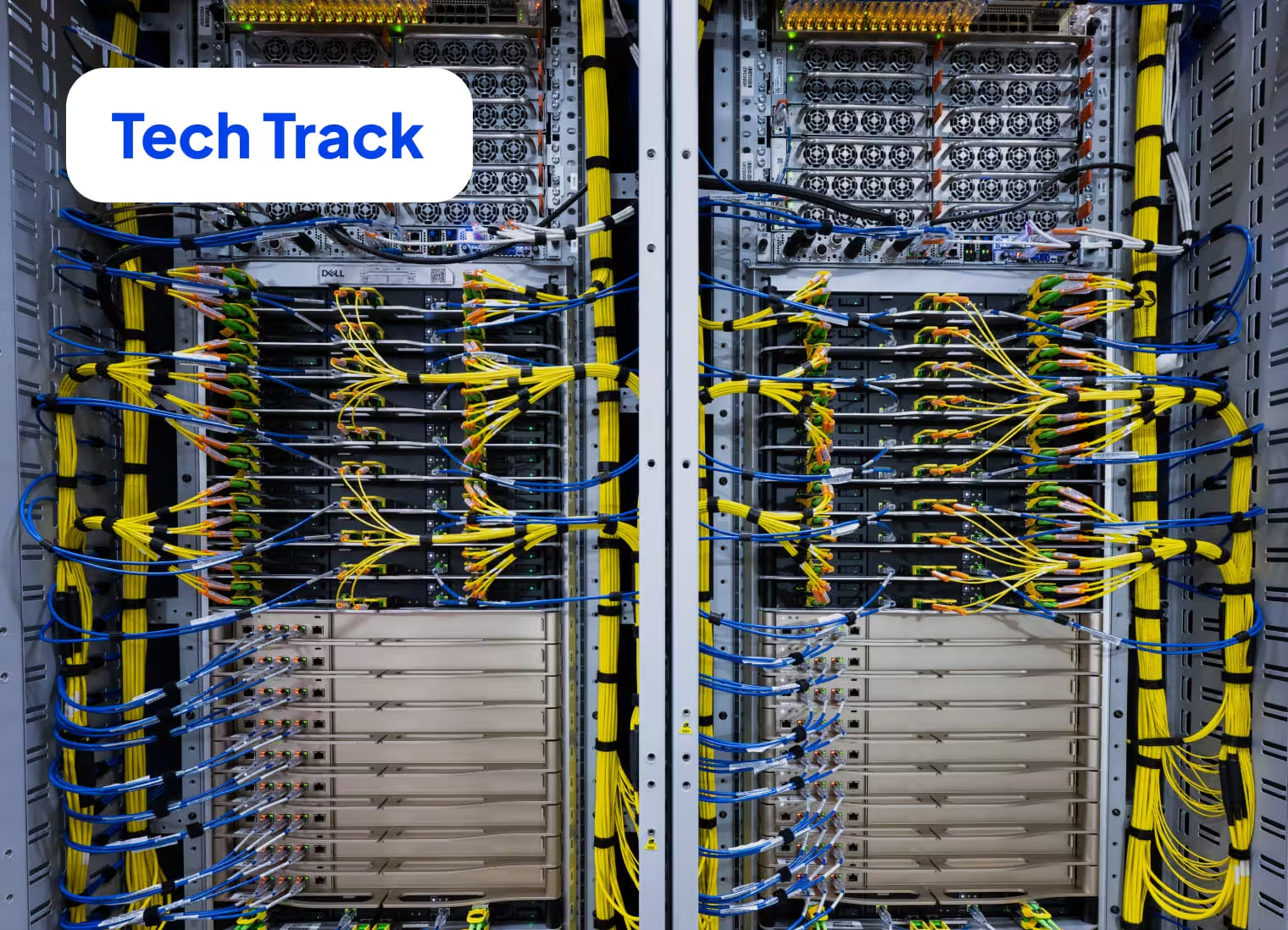
In quantitative research, infrastructure has always been synonymous with having an edge. High-performance compute wasn’t just a supporting function; it was the silent engine enabling alpha generation, risk modeling, and continuous innovation. For many teams, mission-critical meant in-house: racks you could touch, networks you tuned, and systems that exhibited behavior you could track down to the nanosecond.
There were good reasons for that. When intellectual property is your competitive moat, control feels non-negotiable. Owning every node, NIC, and cable meant on-prem clusters delivered deterministic performance, security by design, and an environment where elite engineering teams could see and optimize everything.
For a long time, that model worked, but one big challenge loomed. If any of these systems went down, it wasn’t just an inconvenience—it caused missed market opportunities, invalidated models, or regulatory exposure.
But the landscape has shifted. And not subtly.
Today’s quant workloads look nothing like the ones those clusters were built for. The industry’s definition of “mission critical” is being rewritten in real-time, and the teams that recognize the shift earliest are the ones widening their lead.
The breaking point: when traditional infrastructure fractured
The transformation didn’t happen overnight. It built quietly at first, then all at once. Because quants are often among the first to adopt bleeding-edge compute technologies, they felt these constraints earlier and more acutely than most.
1. The data boom went vertical
Research pipelines ballooned as traditional and alternative data exploded in both volume and complexity. Modern AI pipelines introduced massive distributed compute steps, larger memory footprints, and model architectures that stressed even well-designed on-prem environments. What used to run smoothly on local clusters suddenly demanded bursts of compute and IO that legacy systems simply weren’t built for.
2. Competition compressed the research cycle
Quants have always moved quickly, but generative and more complex forms of AI expedited the tempo. As model complexity grew, so too did the need for more compute and more powerful compute. The ability to quickly iterate on model development has become a competitive differentiator. If your cluster isn’t saturated, if jobs wait in a queue, or if you’re forced to serialize experiments, you aren’t just losing time—you’re surrendering your edge.
3. GPU innovation accelerated beyond on-prem refresh cycle
NVIDIA now releases major GPU advancements in a way that rapidly opens meaningful opportunities for performance gains, shorten training cycles, and time-to-market advantages each year. But that’s only true if quant teams can access the newest hardware. On-premises teams risk slower experimentation, more infrastructure-related interruptions, and longer research cycles simply because they are bound by long procurement cycles and the hardware they already own.
The result was predictable. Queue times grew, bottlenecks multiplied, and teams found themselves constrained by the very systems that once gave them an edge.
Performance and control were still essential but no longer sufficient on their own. Teams needed optionality, elasticity, and infrastructure that could scale at the pace of their ideas.
Mission-critical didn’t weaken. It expanded.
On-prem control and compliance meet cloud-scale elasticity
Quant researchers are rethinking what mission-critical means in the AI era. Elasticity and adaptability, once viewed as trade-offs to control, are now essential to staying ahead. A new infrastructure model was needed—one that combined on-prem-grade determinism with cloud-scale elasticity.
Today, mission-critical infrastructure must deliver:
- Elasticity with control: scaling up for peak experimentation, scaling down when cycles quiet, while maintaining the same security and isolation as on-prem. (Bare-metal Kubernetes, Slurm integration, and single-tenant environments make this achievable.)
- Performance at scale: high-throughput storage and networking that won’t bottleneck multi-node training or large-batch inference. No noisy neighbors. No VM jitter.
- Reliability under load: low-latency performance, proactive alerting, 99% uptime, and consistent job completion even under peak demand.
- First-mover advantage: immediate access to next-generation GPUs and architectures, so teams can explore frontier techniques instead of waiting for procurement cycles to catch up.
When you zoom out, the pattern becomes clear: the competitive advantage now comes from how quickly you can iterate. If your infrastructure can’t scale when model experimentation spikes or can’t handle peak parallel training runs, you’ll fall behind.
The AI cloud advantage—and the next compute frontier
One advantage quant teams have, after years of running sophisticated on-prem infrastructure, is clarity: they know exactly what they need from a compute platform and exactly which failure modes they can’t tolerate. They aren’t looking for abstraction. They’re looking for alignment with the way they already work.
General-purpose clouds offer convenience and scale, but often at the expense of determinism, observability, and access to the latest hardware. AI-native clouds, in contrast, are designed to support GPU-heavy, latency-sensitive research at production quality.
Every purpose-built feature of an AI cloud pushes mission-critical infrastructure further. For example, automated user provisioning streamlines cluster setup, while integrated identity and audit controls strengthen workload security. Proactive fleet monitoring keeps long-running jobs stable, and high goodput with no data-movement fees reduces overhead and lowers total research cost.
Here’s how the two models compare:
General-purpose clouds unlocked the idea of elastic compute, but AI clouds are unlocking the execution quants need today: performance without jitter, isolation without complexity, and access to the latest GPUs without procurement lag. These differences aren’t theoretical. They show up in measurable ways: higher goodput, fewer interruptions, and faster iteration cycles:
- 25% more FLOPs per GPU-hour than a traditional hyperscaler
- 96%+ goodput (meaning fewer interruptions)
For quant teams, those numbers translate directly into research velocity—and ultimately, competitive advantage. This isn’t cloud as a convenience layer. It’s cloud as an enabler of optionality, and with it, your ability to scale at the speed of innovation.
From infrastructure as overhead to infrastructure as alpha
AI infrastructure has always been mission-critical, shaping iteration speed, research velocity, and ultimately the ability to generate alpha. Today’s leaders have simply adapted that truth to a new era.
Because now:
- Performance without unpredictability is mandatory.
- Control without constraint is possible.
- Elasticity without compromise is the new baseline.
An AI cloud doesn’t replace the discipline and rigor quant teams have spent years perfecting. It amplifies it. Where you have options, you have opportunity. And in a field defined by optionality, the infrastructure you choose directly shapes the discoveries you can make.
The winners will be the teams who redefine mission-critical first. The rest will have no choice but to follow.
Ready to rethink your infrastructure?
Explore how top research teams leverage next-generation infrastructure to accelerate their timelines and refine their innovations. Find related resources:
- See the case study: CoreWeave Delivers Scalable, Secure, and High-Performance Cloud Solutions for Jane Street
- Download the whitepaper: Defining the Essential AI Cloud
- Read the blog: 5 Ways Choosing the Wrong AI Cloud Provider Costs You
- Download the solution brief: CoreWeave Mission Control: The Operating Standard for the AI Cloud
Maintain the best AI infrastructure. Establish your competitive edge. Let’s build together.